
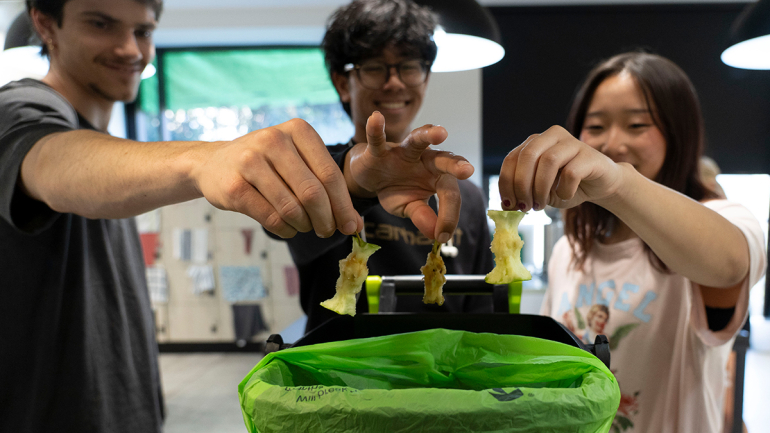
UNSW Environmental Sustainability and UNSW Accommodation teams have successfully introduced food waste sorting in the Colombo House shared kitchen. The pilot is helping:
- UNSW reduce waste to landfill,
- Cut emissions
- Comply with the NSW EPA FOGO (Food Organics and Garden Organics) mandate coming into effect in June 2026.
The pilot focuses on the ground floor kitchen benches of Colombo House, which service around 120 students. An initial waste audit revealed that loose food waste made up 63% of the red (general waste) bin and another 19% was food left inside packaging. From these findings, the team estimated that better separation systems could divert around 300 kilograms of food waste per month.
To achieve this, the project team introduced 23 litre food caddies that fit neatly on kitchen benches, added clear signage and labels, and hosted a launch event with a recycling-pledge wall to engage students. Weekly email reminders and “bin chats” reinforced the new habit.
After five weeks, a follow-up audit delivered impressive results:
- Loose food waste in red bins dropped from 63% to 13% by weight.
- Students successfully separated at least 250 kilograms of food waste for recycling.
- The project avoided 525 kilograms CO₂-e emissions by sending food waste to EarthPower, where it generates renewable energy and nutrient-rich compost.
Students embraced the new system enthusiastically with one student saying:
“For the first few days I forgot about it, but now I use it and love it — it’s so easy.”
The pilot’s success shows how simple, well-supported changes can deliver significant environmental outcomes. With strong results and positive feedback, UNSW Accommodation will roll out food waste caddies to all Colombo House kitchens in 2026, helping UNSW move closer to our landfill diversion targets.